
YouTube
When gamification spoils your learning

On this page
The Illusion of Progress
01
Notes
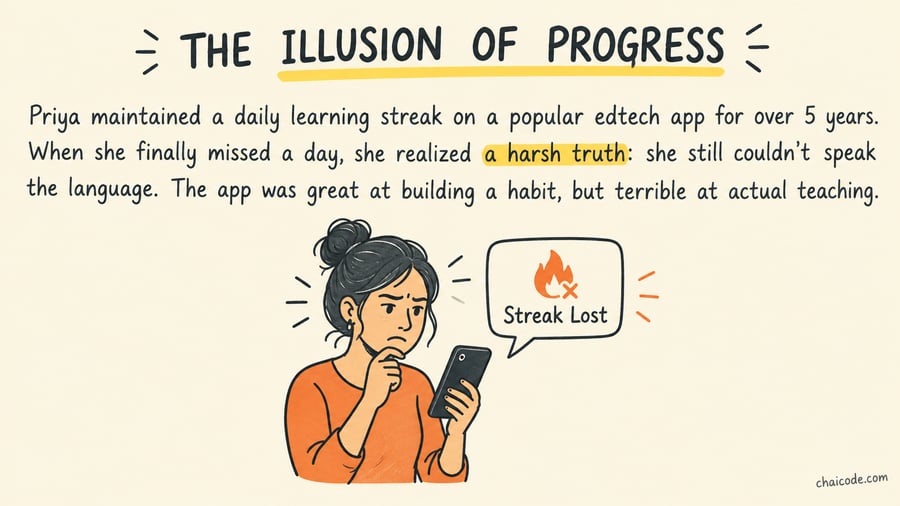
Priya maintained a daily learning streak on a popular edtech app for over 5 years. When she finally missed a day, she realized a harsh truth: she still couldn't speak the language. The app was great at building a habit, but terrible at actual teaching.
Optimizing for the Wrong Metric
02
Notes
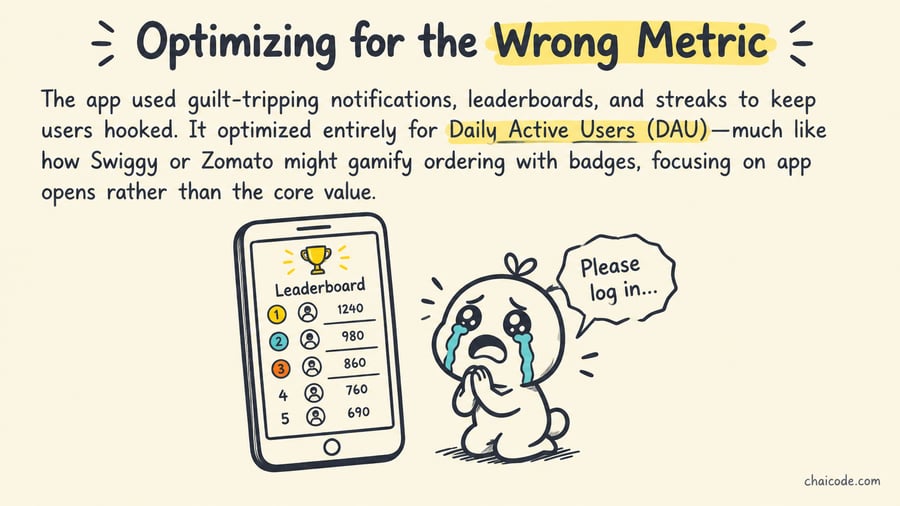
The app used guilt-tripping notifications, leaderboards, and streaks to keep users hooked. It optimized entirely for Daily Active Users (DAU)—much like how Swiggy or Zomato might gamify ordering with badges, focusing on app opens rather than the core value.
The Freemium Engine
03
Notes
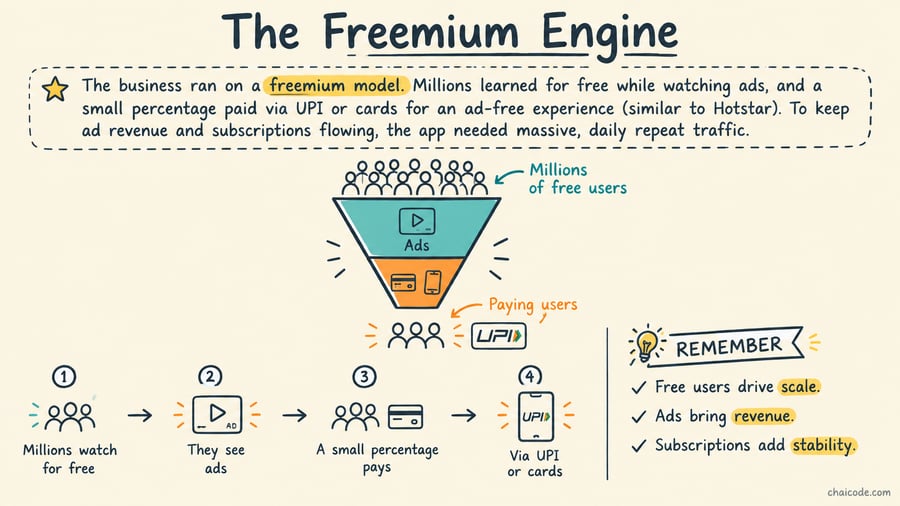
The business ran on a freemium model. Millions learned for free while watching ads, and a small percentage paid via UPI or cards for an ad-free experience (similar to Hotstar). To keep ad revenue and subscriptions flowing, the app needed massive, daily repeat traffic.
The Core Disconnect
04
Notes
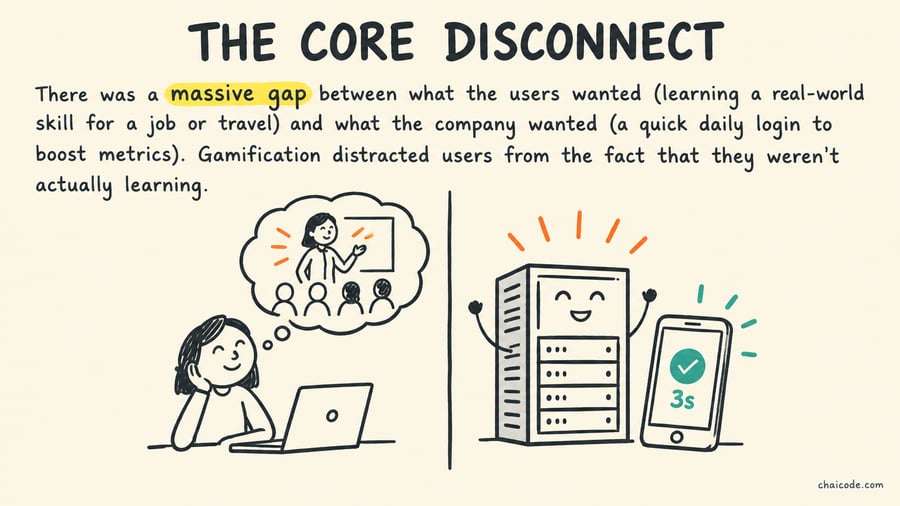
There was a massive gap between what the users wanted (learning a real-world skill for a job or travel) and what the company wanted (a quick daily login to boost metrics). Gamification distracted users from the fact that they weren't actually learning.
The AI Cost-Cutting Pivot
05
Notes
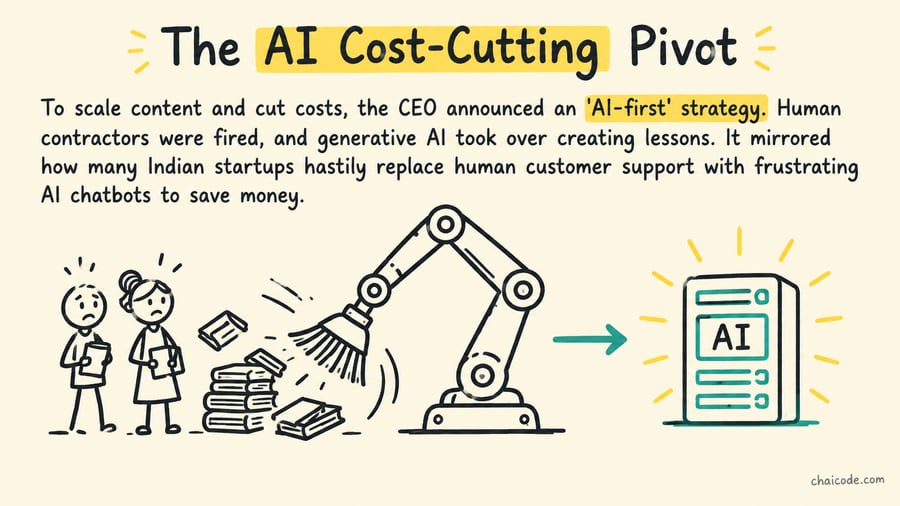
To scale content and cut costs, the CEO announced an 'AI-first' strategy. Human contractors were fired, and generative AI took over creating lessons. It mirrored how many Indian startups hastily replace human customer support with frustrating AI chatbots to save money.
The Quality Collapse
06
Notes
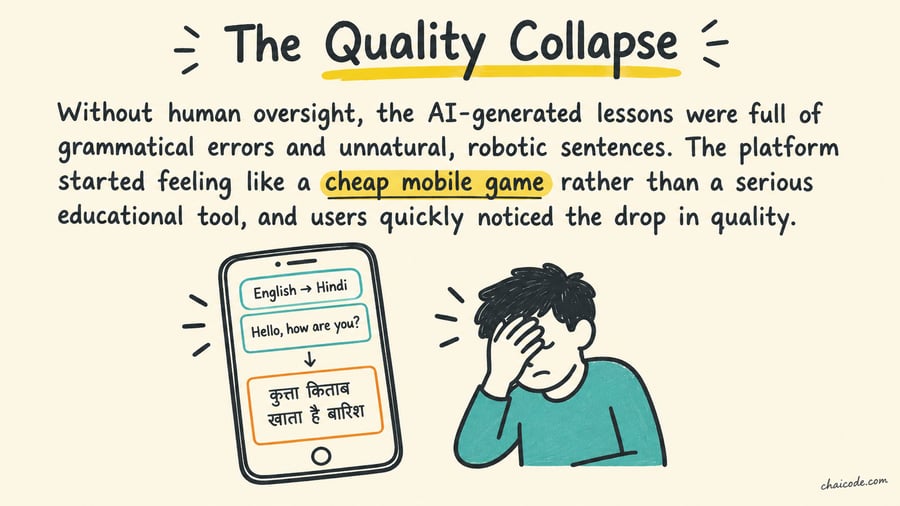
Without human oversight, the AI-generated lessons were full of grammatical errors and unnatural, robotic sentences. The platform started feeling like a cheap mobile game rather than a serious educational tool, and users quickly noticed the drop in quality.
The Public Backlash
07
Notes
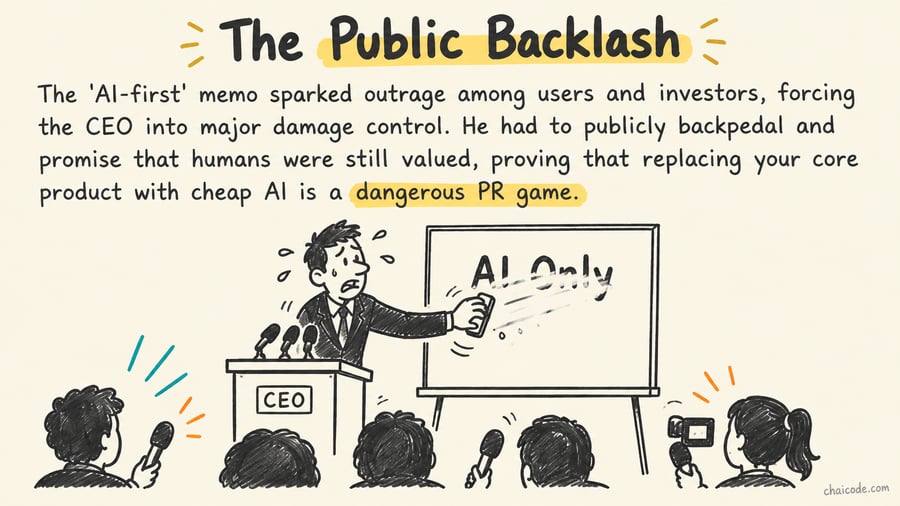
The 'AI-first' memo sparked outrage among users and investors, forcing the CEO into major damage control. He had to publicly backpedal and promise that humans were still valued, proving that replacing your core product with cheap AI is a dangerous PR game.
The Market Reality Check
08
Notes
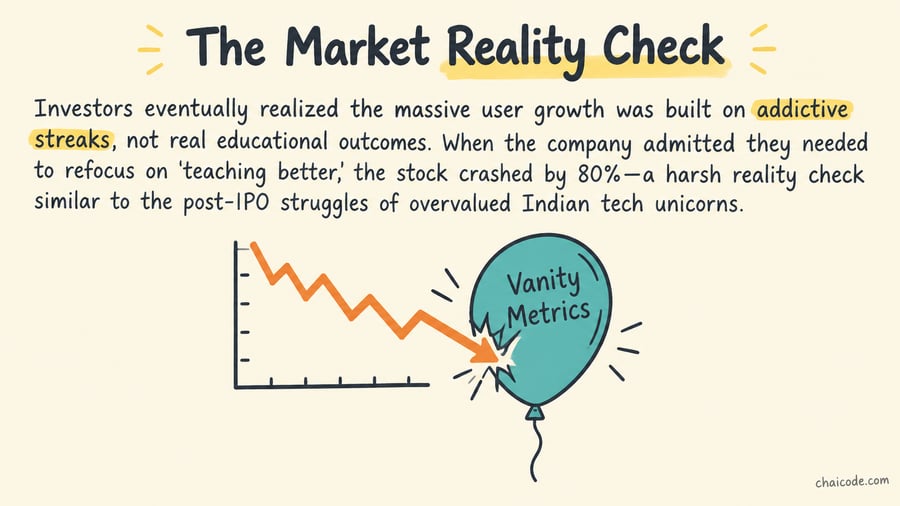
Investors eventually realized the massive user growth was built on addictive streaks, not real educational outcomes. When the company admitted they needed to refocus on 'teaching better,' the stock crashed by 80%—a harsh reality check similar to the post-IPO struggles of overvalued Indian tech unicorns.
Value Over Vanity
09
Notes
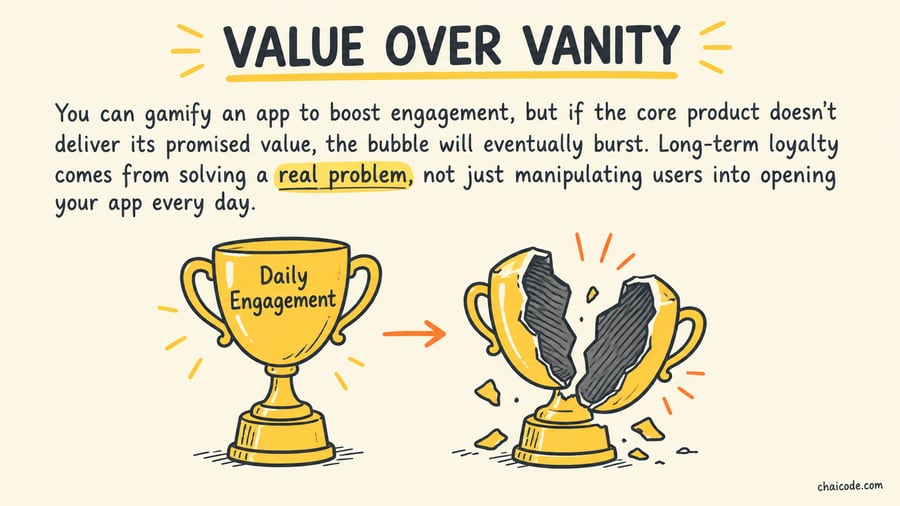
You can gamify an app to boost engagement, but if the core product doesn't deliver its promised value, the bubble will eventually burst. Long-term loyalty comes from solving a real problem, not just manipulating users into opening your app every day.